What a Cross-Market Gap Is Actually Worth
Take a six-cent gap between two venues and subtract every real cost, one line at a time. The remainder is the honest number, and it is much smaller.
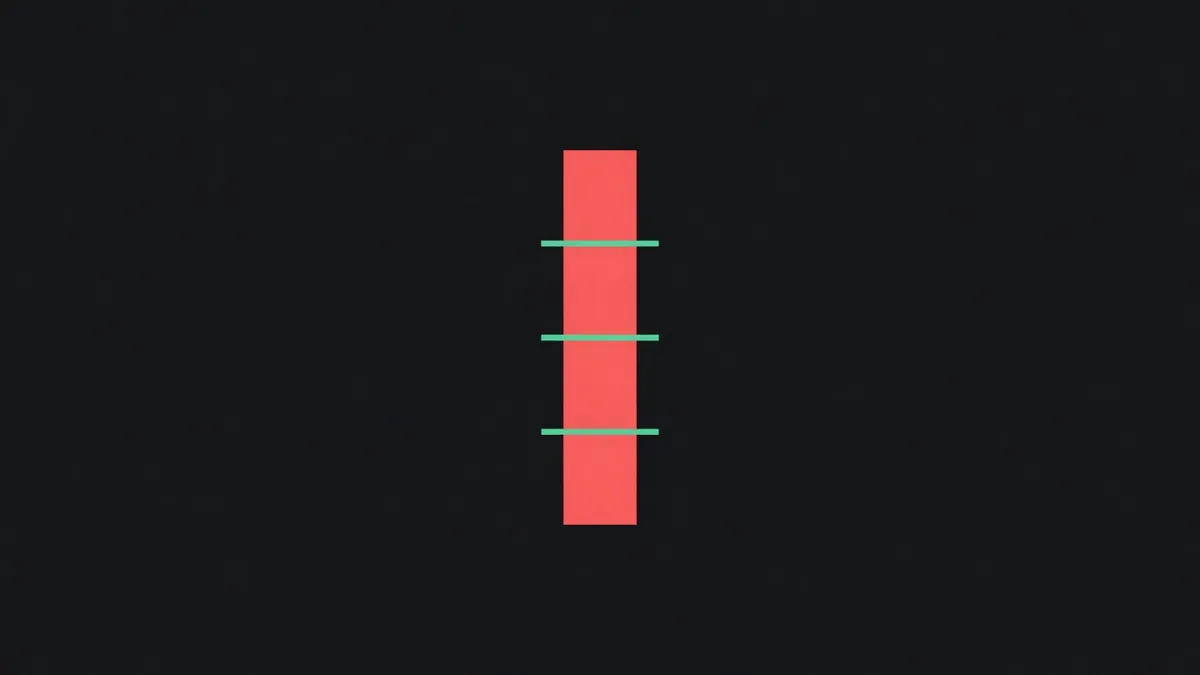
Here is the arithmetic, done properly, on a gap that looks good.
Two venues. The same-sounding question. One shows 61, the other 55. Six cents. That is the headline, and it is the number a comparison tool can honestly compute. Now subtract.
Line one: the spread on each leg
You do not trade at the mid. Buying means paying the offer; selling means hitting the bid.
If the cheap venue is quoted 54/56 and the expensive one 60/62, then buying the cheap side costs 56 and selling the expensive side gets you 60. The gap you can actually transact is four cents, not six.
Remaining: four cents.
Line two: explicit fees
Where a venue charges a trading fee that scales with price times one minus price, a pair of contracts near the middle of the range is in the most expensive region of the curve. Call it a cent across both legs, and check the current schedule rather than trusting that estimate.
Remaining: three cents.
Line three: slippage
The quotes are good for the size at the top of book. If the top of book is forty contracts and you want four hundred, your average fill is worse than the quote on both sides. On liquid pairs this is small. On the pairs showing the biggest gaps it is frequently larger than the gap. Call it half a cent on a decent pair.
Remaining: two and a half cents.
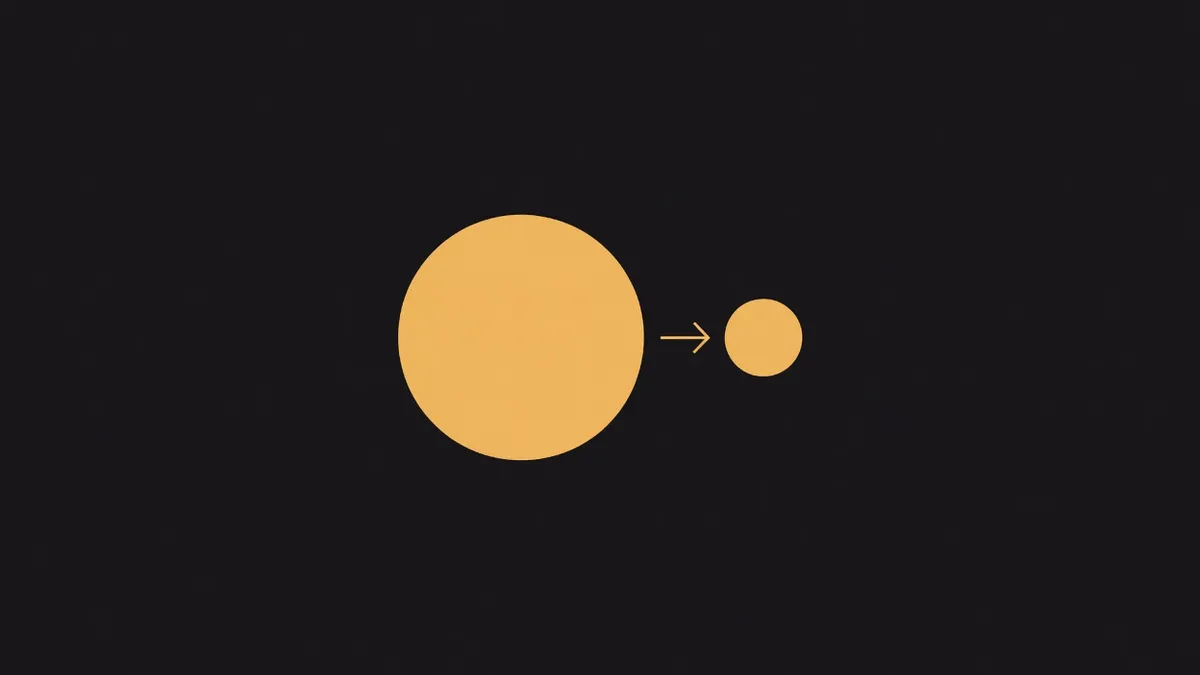
Line four: capital cost
You are now long one side and short the other until settlement. Both legs consume capital: a dollar per contract pair, roughly, locked for the life of the contract.
If settlement is six months away, ask what that capital would otherwise earn. Whatever your alternative is, half a year of it comes off. On a position that ties up a dollar to make two and a half cents, this is not a rounding error — it is a large fraction of the whole return.
Remaining: one to two cents, depending on your cost of capital and the horizon.
Line five: the questions are not identical
The last and largest subtraction, and the one with no clean number.
If the two contracts use different settlement sources, different deadlines, or different tie rules, there are outcomes where both legs lose. That is not a small risk on a position whose entire return is one cent. A one per cent chance of a divergent resolution wipes out a one-cent edge exactly.
This is why comparability has to be graded rather than assumed, and why a pair with a poor grade should be discarded regardless of how large the headline looks. Equivalence grades explains the scoring; resolution differences is the underlying catalogue.
Remaining: anywhere from a small positive number to nothing at all.
What survives
Sometimes something does. Gaps on high-grade pairs, with both sides liquid, close to settlement, are the ones worth attention — short horizon means low capital cost, liquidity means low slippage, high grade means low divergence risk.
Notice that those are also the smallest gaps in the table. That is not a coincidence. The large gaps are large because something about them makes the trade unattractive. Gap size versus liquidity is the empirical version of that claim.
Why the language matters
This site says theoretical cross-market edge and never says profit, because everything on this page sits between the two. The headline number is real and computable. What it is worth to you depends on costs you have and a question this site cannot answer for you.
Cross-market gaps is the live table. The methodology is how the numbers are built.
Next
Educational content only. Nothing here is financial advice, a solicitation, or an offer to trade. Prediction markets can move against you and a position can lose its entire value. Where this guide describes a difference between venues it describes a theoretical cross-market edge in observed prices, which is not a profit: fees, spreads, capital lockup, transfer time and differing settlement rules all come out of it first.
Keep reading
 Cross-Market Gaps · 3 min readWhy Two Venues Price the Same Event DifferentlyA price gap between two prediction markets is usually not an error. Here are the structural reasons the same event trades at different numbers in different places.
 Cross-Market Gaps · 3 min readHow Equivalence Grades Work, and Why They Matter MostBefore comparing two prices you have to decide whether the two questions are the same. That judgement is graded, and the grade matters more than the gap.
 Cross-Market Gaps · 3 min readResolution Differences That Break a ComparisonThe specific ways two markets on the same subject can resolve differently: sources, vintages, deadlines, ties and the fallback when data never arrives.
 Forecasting and Calibration · 3 min readUpdating on News Without OverreactingNew information should move your forecast by an amount proportional to how surprising it is. Most people move too far on noise and not far enough on signal.