How Equivalence Grades Work, and Why They Matter Most
Before comparing two prices you have to decide whether the two questions are the same. That judgement is graded, and the grade matters more than the gap.
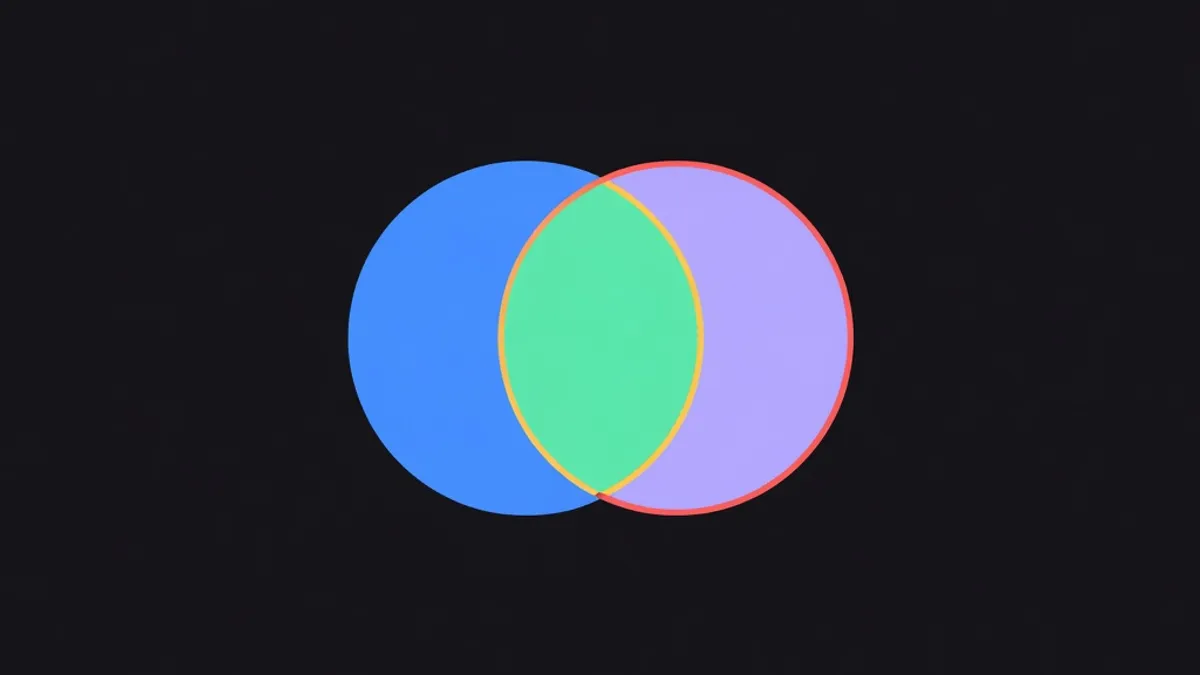
Every cross-venue comparison rests on an assumption that is usually left unstated: that the two questions are the same question. They often are not, and the degree to which they are is the most important number in the whole exercise.
That is what an equivalence grade is. It says how confident the comparison is that these two contracts pay out together.
What gets compared
The underlying observation. Is it the same measured quantity, from the same publisher, in the same units and vintage? "Inflation" is not one number; it is a family of numbers that move differently.
The threshold. The same figure, and the same comparison direction. "Above 3.0" and "3.0 or higher" differ only on an exact tie, which is rare and decisive when it happens.
The timing. The same observation moment, in the same time zone, with the same handling of late publication.
The resolution mechanism. A filed rule applied by an exchange, versus a proposal-and-challenge process. These produce the same answer almost always and not always. Resolution differences.
The edge cases. What happens if the source does not publish, if the event is postponed, if the result is contested.
The structure. A standalone binary versus one outcome from a set. Comparing a binary to a single member of a multi-outcome set is a category error unless the set has exactly two members. Multi-outcome markets.
Why a grade and not a yes or no
Because equivalence is genuinely continuous. Two contracts on the same scheduled data release, same series, same threshold, same timestamp are close to identical. Two contracts on "will this policy be announced" with different wording are related and not equivalent. Most pairs sit somewhere between.
Collapsing that into a boolean throws away the information you most need. A four-cent gap on a near-identical pair and a four-cent gap on a loosely related pair are completely different findings, and only the grade tells them apart.
How to use it
High grade, small gap: the interesting case. Worth understanding. Also the case where costs are most likely to consume the whole thing. What a gap is worth.
High grade, large gap: check for staleness first. A large gap on genuinely equivalent, genuinely liquid contracts is rare and usually means one side has not updated. Stale quotes and timing.
Low grade, large gap: almost always a difference in the question rather than in opinion. This is the largest category by count and the least useful one.
Low grade, small gap: a coincidence. Two different questions that happen to be priced similarly. Nothing to see.
The ordering that matters: filter by grade first, then by liquidity, then look at the gap. Sorting by gap size and reading down the list gets it exactly backwards, which is why the default view on this site does not do that. How to read a gap table.
Where grading is conservative
Where the matcher cannot establish structural equivalence, it declines to pair rather than guessing. The result is a shorter table than a naive matcher would produce.
That is the intended trade. A confident wrong pairing is worse than no pairing, because it looks like a finding. Cross-market mistakes is the list of what happens when this discipline is skipped.
The honest limit
A grade is an automated judgement about text and structure. It is not a lawyer reading two contracts. For anything you would act on, read both sets of rules yourself. The grade is there to tell you which pairs are worth that effort, not to replace it.
The methodology page sets out how the grading is computed.
Next
Resolution differences, the specific mismatches grading is looking for.
Educational content only. Nothing here is financial advice, a solicitation, or an offer to trade. Prediction markets can move against you and a position can lose its entire value. Where this guide describes a difference between venues it describes a theoretical cross-market edge in observed prices, which is not a profit: fees, spreads, capital lockup, transfer time and differing settlement rules all come out of it first.
Keep reading
 Cross-Market Gaps · 3 min readWhat a Cross-Market Gap Is Actually WorthTake a six-cent gap between two venues and subtract every real cost, one line at a time. The remainder is the honest number, and it is much smaller.
 Cross-Market Gaps · 3 min readResolution Differences That Break a ComparisonThe specific ways two markets on the same subject can resolve differently: sources, vintages, deadlines, ties and the fallback when data never arrives.
 Cross-Market Gaps · 3 min readWhy Two Venues Price the Same Event DifferentlyA price gap between two prediction markets is usually not an error. Here are the structural reasons the same event trades at different numbers in different places.
 Forecasting and Calibration · 3 min readKeeping a Forecast Journal That Is Actually UsefulMost forecasting improvement comes from records, not from cleverness. What to write down, what to leave out, and how to review it without flattering yourself.