What Market Makers Do on an Event Exchange
Somebody is quoting both sides and carrying the risk of doing so. Understanding their problem explains most of what the order book looks like.
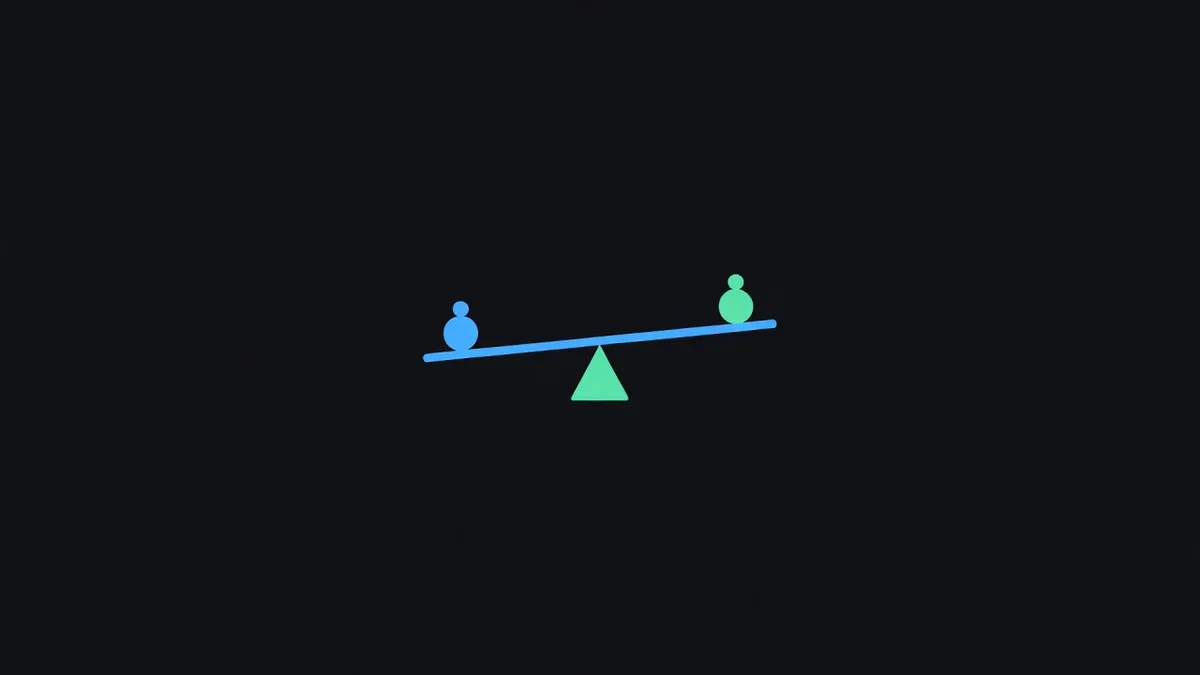
Every resting quote you trade against was placed by someone. Understanding why they placed it, and what they are afraid of, explains most of what an order book does.
The job
A market maker quotes a price on both sides and earns the spread when both get hit. Buy at 60, sell at 62, repeat. The profit per round trip is small; the volume is what makes it work.
They are not forecasting. They are providing the ability to trade immediately, and charging for it.
The risks they are pricing
Inventory risk. When one side trades more than the other, they accumulate a position they did not want. On a binary contract that position is a directional bet with no clean hedge except the same market. The spread has to compensate for this.
Adverse selection. The person hitting your quote may know something. If most of your fills come from informed traders, you lose steadily while your spread capture looks fine on paper. This is the central problem of market making and it is why quotes widen when something is happening.
Capital cost. Inventory on a contract settling in six months is capital locked for six months. The longer the horizon, the wider the quote has to be. Capital lockup.
Resolution risk. On a market with ambiguous wording, the maker carries the risk that settlement surprises everyone. Ambiguous markets have wider spreads for this reason alone. Resolution risk.

What this explains
Why spreads widen around news. Adverse selection spikes. The rational response is to widen or step away until the dust settles, which is why the market is least liquid exactly when it is most interesting.
Why long-dated markets are wider. Capital cost and uncertainty both scale with time. Long-horizon markets.
Why thin markets stay thin. Without flow, there is nothing to earn, so nobody quotes tightly, so there is no flow. The equilibrium is stable and unattractive.
Why the tails are coarse. A one-cent tick on a three-cent contract is enormous, and the inventory risk of holding a long-shot position is asymmetric. Prices near 1c and 99c.
Why venues subsidise makers. Fee rebates and incentive programmes exist because liquidity is the product. Without makers, a venue is a noticeboard.
Being on the other side
If you rest a limit order inside the spread, you are doing this job in miniature, and you inherit the problems.
You will be filled preferentially when the market is moving against you — that is what adverse selection means in practice. You will accumulate inventory you did not choose. And your capital is committed from the moment you are filled.
This is not an argument against resting orders, which are usually the right call on a quiet market. It is an argument for understanding that the spread you are capturing is compensation for something real.
Why this matters for cross-venue reading
Two venues with different fee structures, different participant mixes and different capital costs will have makers pricing different risks. The resulting quotes differ for entirely legitimate reasons.
A price gap that reflects two different inventory-risk calculations is not an inefficiency. It is two correct answers to two slightly different problems. Why venues disagree.
Next
Volume versus open interest — two numbers people use interchangeably and should not.
Educational content only. Nothing here is financial advice, a solicitation, or an offer to trade. Prediction markets can move against you and a position can lose its entire value. Where this guide describes a difference between venues it describes a theoretical cross-market edge in observed prices, which is not a profit: fees, spreads, capital lockup, transfer time and differing settlement rules all come out of it first.
Keep reading
 Order Books and Liquidity · 3 min readDepth, Slippage, and the Price You Actually GetThe quote is good for the size at the top of the book. Beyond that you walk the book, and the average price you pay is not the one you saw.
 Order Books and Liquidity · 3 min readVolume and Open Interest Are Not the Same NumberOne counts how much changed hands, the other counts how much is outstanding. They tell you different things and conflating them misreads a market badly.
 Order Books and Liquidity · 3 min readWhat the Spread Actually Costs YouThe gap between bid and offer is the largest cost on most event-market trades, and the only one that never appears on a statement. How to price it.
 Cross-Market Gaps · 3 min readHow Equivalence Grades Work, and Why They Matter MostBefore comparing two prices you have to decide whether the two questions are the same. That judgement is graded, and the grade matters more than the gap.