Depth, Slippage, and the Price You Actually Get
The quote is good for the size at the top of the book. Beyond that you walk the book, and the average price you pay is not the one you saw.

A quote of 62 means someone will sell at 62. It does not say how many. If they will sell twenty and you want four hundred, you are going to pay more than 62 for most of your order.
Walking the book
A book might look like: 40 offered at 62, 120 at 63, 300 at 65, 1000 at 68.
Buy 400 and you take all of the first three levels plus part of the fourth. Your average fill is somewhere near 65, not 62. That three-cent difference is slippage, and on a market where your whole thesis is worth four cents it is most of the trade.
Measuring it before you trade
If depth data is available, compute the average fill for the size you want. This is straightforward arithmetic and almost nobody does it.
Two useful numbers to keep:
Effective price at size. The volume-weighted average fill for your intended size, on each side. This is the real quote for you.
Depth to a threshold. How many contracts are available within two cents of the top. A quick way to compare liquidity across markets on a comparable basis.
Why this dominates thin markets
On a liquid market, a hundred contracts might sit at the top of book and slippage is zero for ordinary sizes. On a thin one, the entire visible book might be sixty contracts across four price levels spanning eight cents.
That is the real reason the biggest cross-venue gaps are always the least liquid. Those gaps are measured against quotes that represent almost no size, and any attempt to act on them moves the price through the gap immediately.
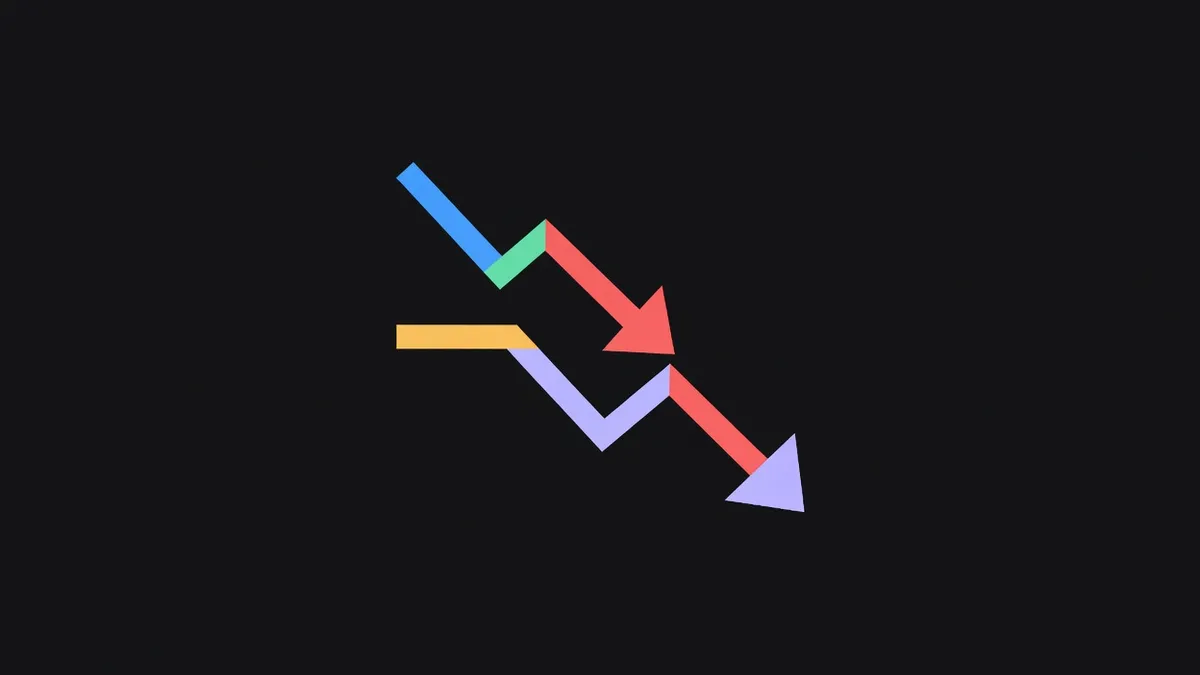
Hidden and fleeting liquidity
Two complications that cut opposite ways.
More may appear. Makers often do not show their full size. Working an order patiently can reveal liquidity that was not on the screen.
It may disappear. Quotes can be cancelled faster than you can take them. A book that looks deep can evaporate when something happens, and it evaporates precisely when you most want it.
Both argue for working orders in pieces rather than sending one large one.
Reducing slippage
Split the order. Several smaller orders over time usually beat one large one, and let resting liquidity refresh between them.
Rest instead of taking. A limit order pays no slippage at all. It pays in the risk of not being filled. Limit orders versus market orders.
Size to the book, not to your conviction. If the market supports fifty contracts and your thesis says five hundred, you have a fifty-contract position. This is not a constraint you can argue with.
Trade when others do. Depth follows activity. Around scheduled events and during active hours, books are deeper.
The rule for any measured edge
Before treating a price difference as an opportunity, ask what size it exists in. A four-cent edge on twenty contracts is eighty cents, minus costs, minus the capital for the whole life of the contract.
Expressing every measured gap as a figure in money at achievable size, rather than as a difference in cents, converts a lot of exciting findings into obviously pointless ones. That is the correct conversion. How to read a gap table.
Next
What market makers actually do, and why spreads are the width they are.
Educational content only. Nothing here is financial advice, a solicitation, or an offer to trade. Prediction markets can move against you and a position can lose its entire value. Where this guide describes a difference between venues it describes a theoretical cross-market edge in observed prices, which is not a profit: fees, spreads, capital lockup, transfer time and differing settlement rules all come out of it first.
Keep reading
 Order Books and Liquidity · 3 min readWhat the Spread Actually Costs YouThe gap between bid and offer is the largest cost on most event-market trades, and the only one that never appears on a statement. How to price it.
 Order Books and Liquidity · 3 min readWhat Market Makers Do on an Event ExchangeSomebody is quoting both sides and carrying the risk of doing so. Understanding their problem explains most of what the order book looks like.
 Order Books and Liquidity · 3 min readVolume and Open Interest Are Not the Same NumberOne counts how much changed hands, the other counts how much is outstanding. They tell you different things and conflating them misreads a market badly.
 Polymarket · 3 min readThings That Surprise People on PolymarketWording that decides outcomes, capital stuck after the event is over, and the security rules that are absolute. The catch-out list in one place.