The Limits of Any Measured Edge
A measured price difference is a measurement. The distance between that and a return is made of costs, capacity, decay and the chance the measurement is wrong.
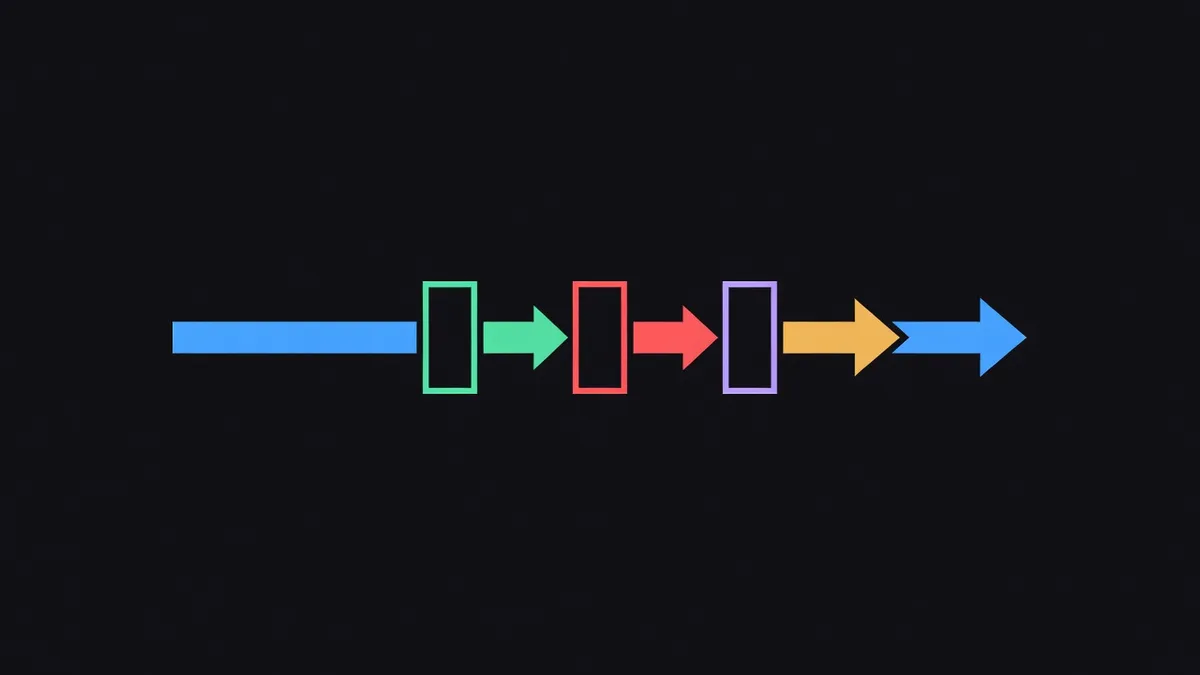
This site measures price differences between venues and reports them as a theoretical cross-market edge. This page is about the gap between that phrase and money, because that gap is the honest content of the whole exercise.
The measurement is real
A price difference between two venues is an observable fact. Computing it accurately — with live quotes, size weighting, timestamp discipline and structural matching — is real work and produces a real number.
Nothing here suggests the measurement is meaningless. It is the interpretation that requires care.
What stands between it and a return
Costs. Spread, fees, slippage, transfers. Frequently the whole gap. How fees eat an edge.
Capital. Both legs committed until settlement, earning nothing. Capital lockup.
Capacity. A gap that exists on forty contracts is worth a few dollars. Size is the constraint almost every time. Gap size versus liquidity.
Question mismatch. If the two contracts are not identical, there are outcomes where both legs lose. On a position whose whole return is two cents, a small probability of divergent resolution is decisive. Equivalence grades.
Timing. The gap may not exist by the time you act, or may never have existed outside a clock difference. Stale quotes and timing.
Access. Being able to trade both venues at once is not universal, and it is the reason many gaps persist. Why venues disagree.
Edges decay
Anything genuinely available attracts participants until it is not. A measured edge is a snapshot of a moment, and the more visible and the more mechanical it is, the faster it goes.
A public dashboard makes information more available, not less. That is its purpose, and the consequence is that anything it surfaces gets competed away faster than something nobody can see.
Your measurement might be wrong
The most underweighted item. Sources of error, all common: a matching mistake pairing two different questions; a direction flip; a stale quote on one side; a one-sided book producing an invented mid; a multi-outcome set compared to a binary.
Every one of these produces a large, confident, wrong number. Cross-market mistakes.
The sample problem
Even a real edge is hard to confirm. Distinguishing a small genuine edge from noise takes hundreds of independent observations, and most people have dozens. Luck versus skill in small samples.
What the data is actually good for
Reading. Two independent aggregates on the same question are more informative than one. Aggregating forecasts.
Noticing. A gap that opens suddenly usually means something happened on one side. That is information whether or not it is tradeable. Top movers.
Understanding structure. Where venues systematically differ is a map of how their participants, costs and rules differ.
Calibration practice. Comparing your own view against two markets, with records, improves forecasting. Keeping a forecast journal.
The language, once more
Theoretical cross-market edge. Theoretical because it is before costs and before anything goes wrong. Cross-market because it exists between venues rather than within one. Edge because it is a difference, not a return.
Never profit. Never guaranteed. Not because of caution, but because those words would be inaccurate descriptions of what the number is. Cross-market gaps and the methodology.
Next
Educational content only. Nothing here is financial advice, a solicitation, or an offer to trade. Prediction markets can move against you and a position can lose its entire value. Where this guide describes a difference between venues it describes a theoretical cross-market edge in observed prices, which is not a profit: fees, spreads, capital lockup, transfer time and differing settlement rules all come out of it first.
Keep reading
 Risk and Costs · 3 min readPosition Sizing When You Might Be WrongSizing determines survival more than selection does. The arithmetic of ruin, why fractional approaches exist, and why the book is the real constraint.
 Risk and Costs · 3 min readResolution Risk, the One That Is Not in the PriceBeing right about the world and wrong about the contract is a real and recurring outcome. Where it comes from and which markets carry most of it.
 Risk and Costs · 3 min readCapital Lockup, the Cost Nobody Bills You ForMoney committed to an event contract earns nothing until settlement. On long-dated markets this cost dominates everything else and it appears on no statement.
 Cross-Market Gaps · 3 min readTen Ways Cross-Market Analysis Goes WrongThe recurring errors in comparing prediction market prices across venues, from stale quotes to mismatched thresholds, and how to catch each one.