Exit Early or Hold to Settlement
Taking a profit before resolution frees capital and pays a spread. Holding pays no spread and ties up capital. The arithmetic that decides it.
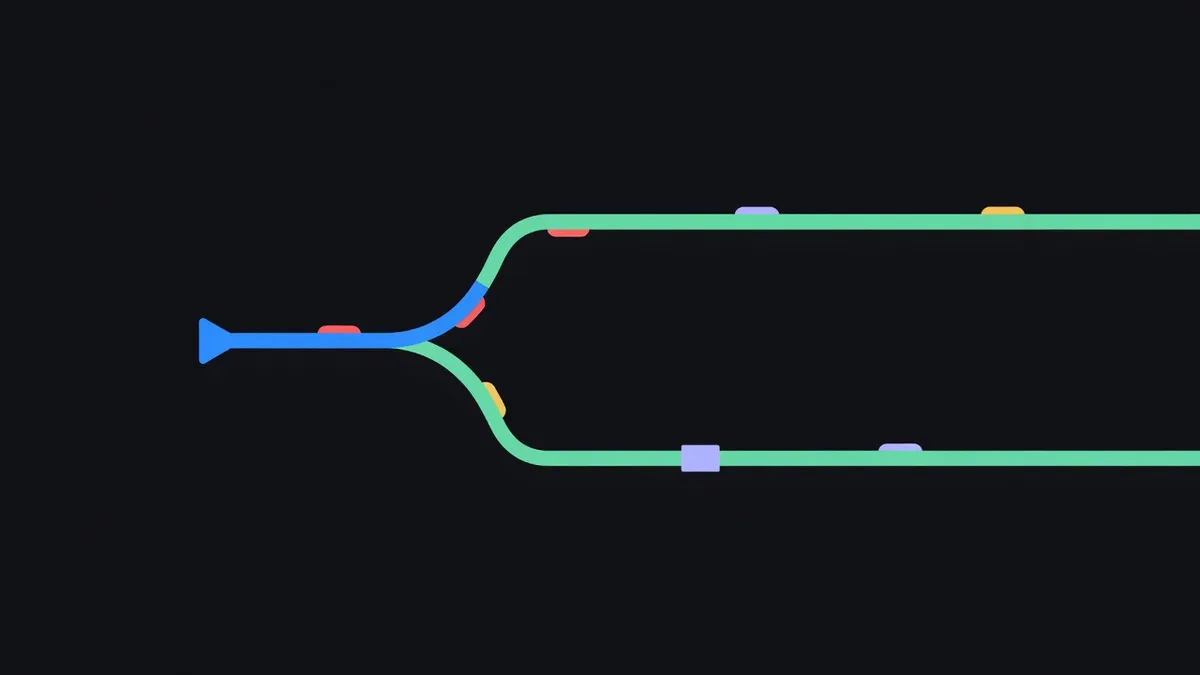
You are long at 40 and the market is now 70. Take it, or hold for the remaining dollar? The answer is arithmetic, not temperament.
What exiting costs
The spread. You sell at the bid, not the mid. On a 68/72 market you get 68, not 70.
Slippage, if you are large. Depth and slippage.
Any exit fee. Where fees are charged per trade, exiting pays again.
Call it two to four cents on a typical market.
What holding costs
Capital for the remaining term. Your 40 cents, or rather the full position value, stays committed until settlement.
Resolution risk. The market says 70. The remaining 30% of outcomes cost you the position. Resolution risk.
Settlement delay. Payout may lag the event.
The comparison
Exiting at 68 gives you 68 now. Holding gives you 100 with probability p and 0 otherwise, where p is your own estimate, at some future date.
Hold if your p times 100, discounted for the time and the risk, exceeds 68. In practice:
Your own p is what matters, not the market's. If you think it is 85 and the market says 70, holding is attractive. If you agree with the market at 70, then exiting at 68 costs you two cents to remove all remaining uncertainty and free your capital — and that is often a good deal.
Time to settlement is central. Two cents to exit a position settling tomorrow is expensive. Two cents to exit a position settling in seven months is cheap, because the capital freed can do something else for seven months. Capital lockup.
Resolution risk is not symmetric. A market at 70 on a cleanly specified question is a different proposition from a market at 70 on a woolly one. The woolly one has extra risk that is not in the price.

Rules of thumb
Exit when your edge is gone. If you bought because you thought 40 was too cheap and it is now at your estimate of fair value, the reason for holding has expired. Holding on is a new trade you have not justified.
Exit long-dated positions that have converged. The capital cost dominates. A position at 92 with eight months to run is tying up a lot of money for a small remaining gain and a real tail risk.
Hold short-dated positions. Little capital cost, and the exit spread is a large fraction of what is left.
Exit anything you no longer understand. If the resolution criteria turn out to be ambiguous, or the settlement source is in doubt, get out while there is a market. This one overrides the arithmetic.
The tail trap
A position at 95 offers five cents. To earn it you risk ninety-five, and you commit ninety-five for the remaining term. Annualised over months, that is a poor return with a real chance of total loss — and exactly the trade the favourite-longshot bias says is systematically overpriced.
A great many people hold winning positions to the last five cents out of a sense of completion. The arithmetic rarely supports it.
For cross-venue positions
Both legs must be exited together or held together. Unwinding one leg leaves you with an outright position you did not choose, which is the fastest way to turn a small measured edge into a large loss. Plan the exit before entering. What a gap is worth.
Next
Educational content only. Nothing here is financial advice, a solicitation, or an offer to trade. Prediction markets can move against you and a position can lose its entire value. Where this guide describes a difference between venues it describes a theoretical cross-market edge in observed prices, which is not a profit: fees, spreads, capital lockup, transfer time and differing settlement rules all come out of it first.
Keep reading
 Order Books and Liquidity · 3 min readWhat Settlement Does to a Position You Still HoldHolding to settlement means no exit, no spread on the way out, and a payout decided by a rule. The mechanics, and the ways they surprise people.
 Order Books and Liquidity · 3 min readOrder Books Versus Automated Market MakersTwo ways to make a market in an event contract. One always quotes and may quote badly; the other quotes well when there is interest and not at all otherwise.
 Order Books and Liquidity · 3 min readThin Market Warning SignsA checklist for spotting a market whose price is not a forecast, before you quote it, compare it or build anything on top of it.
 What Markets Price · 3 min readHow Markets Behave Around a Scheduled Data ReleaseA known number arrives at a known second. What happens to spreads, depth and prices before, during and after, and why the window is not for everyone.