How Polymarket's Order Book Actually Works
Matching happens off-chain and settlement happens on-chain. What that hybrid means for spreads, fills, latency and the data you can read from outside.
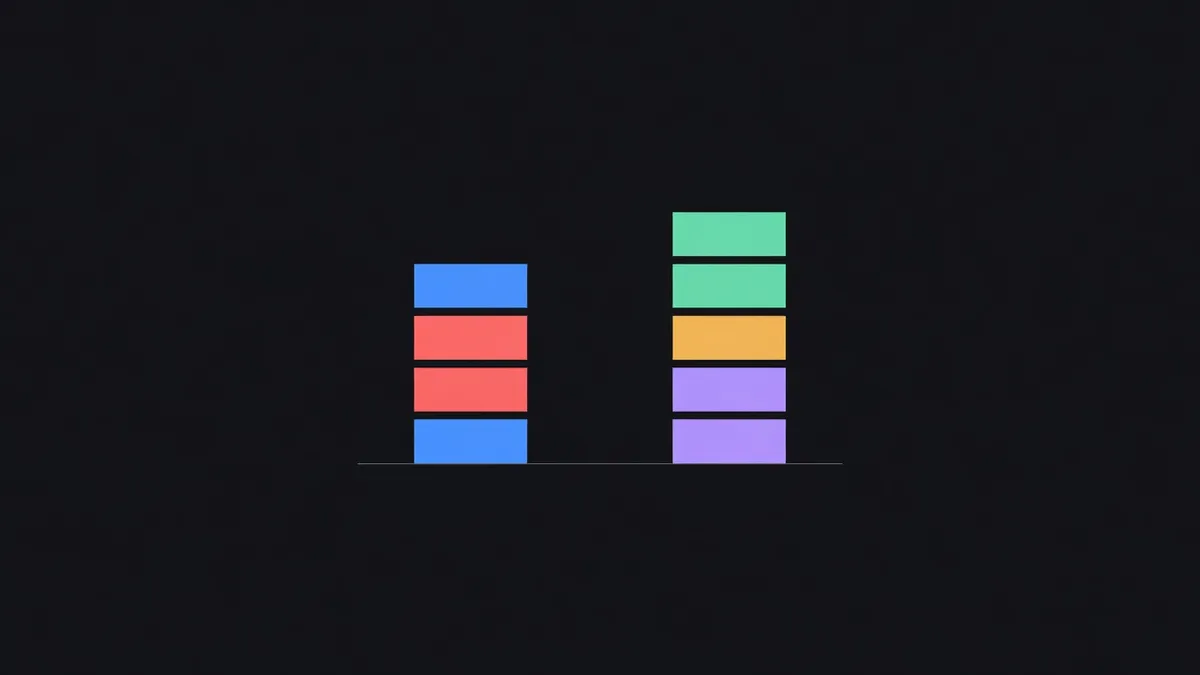
Polymarket runs a central limit order book, the same structure as any exchange: resting bids, resting offers, price-time priority. The twist is where each part lives.
Off-chain matching, on-chain settlement
Placing an order means signing a message, not sending a transaction. The order rests in an off-chain book operated by the venue. When two orders match, the result is settled on-chain against the smart contracts holding collateral.
This is a deliberate compromise. Fully on-chain order books are slow and expensive to maintain — every cancel costs money. Fully off-chain books require trusting an operator with custody. This design puts the fast, chatty part off-chain and keeps custody and final settlement on-chain.
What it means in practice
Placing and cancelling are cheap. You are signing, not transacting. Market makers can quote and adjust continuously, which is a large part of why spreads on the busy markets are tight. What market makers do.
The operator controls the book. Matching, ordering and what the API exposes are operator functions. This is centralisation inside a decentralised settlement layer, and it is the honest characterisation of the design.
Settlement finality is on-chain. Once a trade settles, it is on the chain and your position is a token you hold.

Reading the book from outside
Public market data typically gives you resting size at each price level on both sides. That is more than you get in many places and it is genuinely useful.
Compute a size-weighted mid, not a naive one. If there are 4,000 contracts bid at 60 and 30 offered at 64, the midpoint of 62 misrepresents where trading would happen. Reading an order book covers the technique.
Measure depth before assuming a price. The top of book might be twenty contracts. A hundred-contract order walks through several levels and your average fill is nowhere near the quote. Depth and slippage.
Watch for one-sided books. A bid with no offer at all is common on quiet markets. Any mid you compute there is fiction, and any cross-venue gap built on it is fiction too.
This last point is the single biggest source of false signals in cross-venue comparison. A gap that exists only because one side of one book is empty is not a gap. How to read a gap table covers the filters that catch it.
Order book versus automated market maker
Early on-chain prediction venues used automated market makers, where a formula quotes a price against a pool. Order books generally give better pricing where there is real two-sided interest, and worse or no pricing where there is none. AMMs always quote, at a price that may be bad. Order books versus AMMs compares them properly.
Latency and comparison
Off-chain matching is fast. If you are comparing a price here with one from a venue you poll every ninety seconds, the comparison is only as good as the older of the two observations.
Timestamp everything with the moment the venue reported it, not the moment you fetched it, and discard pairs where the two sides are too far apart in time. Stale quotes and timing is the discipline.
Next
Fees and gas — where the money actually goes.
Educational content only. Nothing here is financial advice, a solicitation, or an offer to trade. Prediction markets can move against you and a position can lose its entire value. Where this guide describes a difference between venues it describes a theoretical cross-market edge in observed prices, which is not a profit: fees, spreads, capital lockup, transfer time and differing settlement rules all come out of it first.
Keep reading
 Polymarket · 3 min readStablecoin Collateral and What Self-Custody Means HerePositions are backed by a dollar-pegged stablecoin held in a contract. What that protects you from, what it does not, and the security rules that follow.
 Polymarket · 3 min readFees, Gas and the Real Cost of Trading On-ChainTrading fees are only part of it. Network costs, bridging, spreads and capital lockup all take a share, and some of them are easy to miss entirely.
 Polymarket · 3 min readWhen Resolution Is Disputed, and What It TeachesMost markets resolve quietly. The contested ones follow recognisable patterns, and those patterns tell you which questions to be careful with.
 What Markets Price · 3 min readAward and Culture MarketsPrizes, ceremonies and cultural milestones. Small, thin, entertaining, and a surprisingly good place to practise forecasting against a clean outcome.