How a Kalshi Contract Is Put Together
Series, event, strike and settlement rule. Taking apart a single Kalshi market so the ticker stops looking like noise and starts reading as a sentence.

A Kalshi ticker looks like an accident until you know what the parts are. It is actually a sentence with a fixed grammar, and once you can read it, a list of two hundred markets stops being a wall and becomes a small number of questions asked at different thresholds.
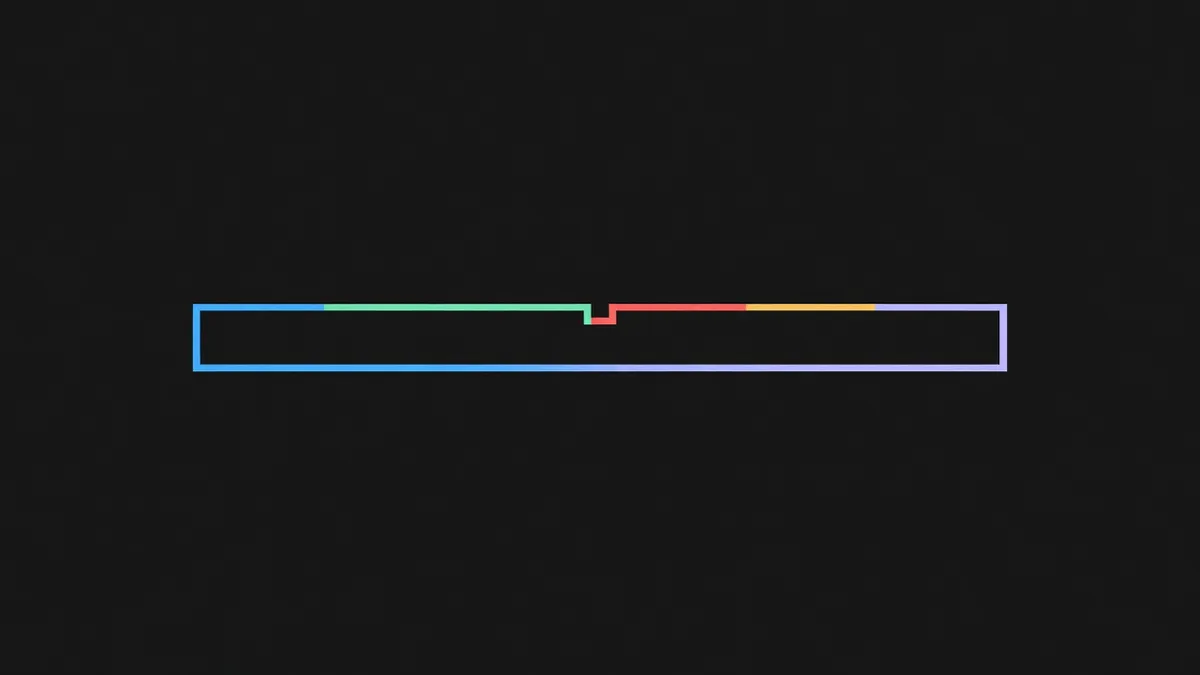
The four layers
Series. The recurring question. "The closing level of this index" or "this monthly economic release". A series is a template that gets instantiated over and over.
Event. One instance of the series tied to a specific period. This month's release. Today's close. An event groups everything that resolves from the same underlying observation.
Market. One binary contract inside the event, defined by a threshold. The event might be "this month's figure"; the markets inside it are "above 2.0", "above 2.5", "above 3.0" and so on.
Strike. The threshold itself, and the comparison operator. Above, below, between. This is the part people misread most often, because "above 3.0" and "3.0 or above" are different contracts when the reported figure lands exactly on 3.0.
Reading a ticker
The pieces appear in order, coarse to fine: the series code, then the period, then the strike. Once you see that, you can scan a page of tickers and immediately know which ones belong to the same underlying event and which are unrelated.
This matters for comparison work. Two contracts in the same event are not independent bets; they are points on one distribution. Buying "above 2.5" and selling "above 3.0" is a position on the gap between them, not two separate opinions. How multi-outcome markets sum covers the arithmetic that ties them together.
The settlement rule
Each market names its source and its timing. The rule specifies:
- The source. Which agency, which publication, which page.
- The observation. First print or revised figure. Official result or provisional.
- The timing. The moment the value is taken, in a named time zone.
- The rounding. How many decimal places, and how ties at the strike are handled.
- The fallback. What happens if the source does not publish.
That last one is worth reading before you hold a position through an event. Sources are delayed, suspended and reorganised more often than people expect, and the fallback clause is the difference between a clean settlement and a long wait. Resolution risk collects the failure modes.
Strikes and the shape of a question
A single event with many strikes gives you a full probability distribution rather than one number. If "above 2.0" trades at 88 and "above 2.5" trades at 61, the market is implying a 27% chance the figure lands between 2.0 and 2.5.
You can read a whole distribution off a strike ladder in about ten seconds once you are used to it, and it is far more informative than any single headline probability. It also exposes inconsistency: if a higher strike ever trades above a lower one, something is wrong, and it is usually staleness on one of the two quotes rather than an opportunity. Stale quotes and timing is about exactly that trap.
Where contracts get compared
When this site pairs a Kalshi market with one somewhere else, the structure above is what the comparison runs on. The two questions must share the same underlying observation, the same threshold, the same comparison direction and a compatible settlement time. Any one of those being off turns a comparison into a category error.
That is why the pairing carries a grade rather than a yes or no. Matching markets across venues describes what the matcher looks at and where it refuses to guess.
Next
How Kalshi fees work covers the cost that is attached to every one of these contracts, and why it is largest exactly where people trade most.
Educational content only. Nothing here is financial advice, a solicitation, or an offer to trade. Prediction markets can move against you and a position can lose its entire value. Where this guide describes a difference between venues it describes a theoretical cross-market edge in observed prices, which is not a profit: fees, spreads, capital lockup, transfer time and differing settlement rules all come out of it first.
Keep reading
 Kalshi · 3 min readWhat Kalshi Is, and What Makes It DifferentKalshi is a US federally regulated exchange for event contracts. Here is what that regulation actually changes about the product you trade on.
 Kalshi · 3 min readHow Kalshi Fees Work, and Where They Hurt MostKalshi's trading fee is not a flat percentage. It is shaped like a curve that peaks at fifty cents, and that shape changes which trades are worth doing.
 Kalshi · 3 min readWhere Kalshi Settlement Numbers Actually Come FromA contract is only as good as the source that settles it. What Kalshi names as its sources, how revisions are handled, and what happens when data goes missing.
 Risk and Costs · 3 min readCorrelated Positions That Look DiversifiedTwenty positions on six underlying events is six bets. Spotting hidden correlation in an event market portfolio, where it hides in plain sight.