Variance, Drawdown, and What a Losing Run Feels Like
With a small genuine edge, long losing stretches are normal and indistinguishable from having no edge at all. Planning for that in advance is the whole game.
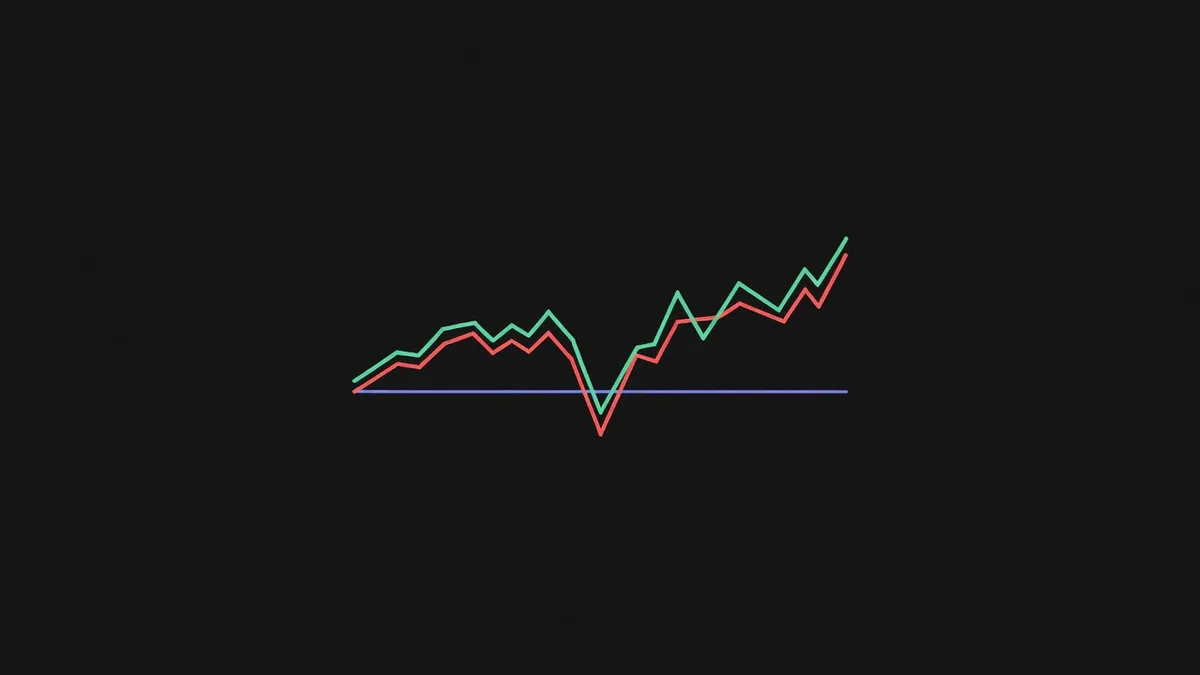
A binary contract pays everything or nothing. That produces more variance than most people expect and makes the experience of a working strategy considerably more uncomfortable than its expected value suggests.
The shape of the outcomes
Every position is all or nothing. There is no partial win. A portfolio of twenty positions resolves as twenty full wins or losses, not as a smooth aggregate.
With a set of positions averaging 60% likely, you expect twelve of twenty. Getting eight is entirely ordinary. Getting six happens often enough that you should plan for it.
Losing runs are normal
Consider a strategy that is right 60% of the time with a small positive expectation. Five losses in a row happens about once in a hundred sequences of five. Over a few hundred positions, several such runs are near-certain.
During one, your equity falls, your confidence falls, and nothing distinguishes it from a strategy that has stopped working. That is the genuinely hard part: the information you need is not available at the time you most want it. Luck versus skill in small samples.
Correlation makes it worse
Positions that look independent often are not. Several markets on the same underlying event resolve together. A portfolio of twenty positions on six underlying events has six outcomes, and its variance is far higher than the position count suggests. Correlated positions.

The extremes are the worst offenders
A portfolio of positions at 95 cents produces long comfortable runs of small gains interrupted by occasional total losses. The expected value can be fine while the path is brutal, and the shape encourages exactly the wrong response — increasing size during the comfortable stretch.
Selling long shots has the same profile: many small wins, rare large losses. The favourite-longshot bias is the mispricing; this is what harvesting it actually feels like.
Planning for it
Size for the drawdown, not for the expectation. Ask what happens after the worst plausible run and whether you could continue. Position sizing.
Decide the abandonment rule in advance. Before any capital is committed: what result would make you stop. Deciding this during a drawdown guarantees a bad decision.
Count independent events. Your real diversification is the number of unrelated outcomes, not the number of tickets.
Keep the record. During a losing run the only thing that distinguishes bad luck from a broken process is the record of what you predicted and why. Keeping a forecast journal.
The uncomfortable arithmetic
With a genuinely small edge, the time required to be confident it exists is longer than most people's patience and larger than most people's sample. You will spend most of that period unsure.
That is not a reason to avoid the domain. It is a reason to size so that being unsure is survivable, and to treat any confident claim about a short track record — including your own — with suspicion.
Next
Educational content only. Nothing here is financial advice, a solicitation, or an offer to trade. Prediction markets can move against you and a position can lose its entire value. Where this guide describes a difference between venues it describes a theoretical cross-market edge in observed prices, which is not a profit: fees, spreads, capital lockup, transfer time and differing settlement rules all come out of it first.
Keep reading
 Risk and Costs · 3 min readThe Behavioural Traps Specific to Event MarketsBinary payouts, visible probabilities and questions you have opinions about combine into a specific set of psychological failure modes.
 Risk and Costs · 3 min readCorrelated Positions That Look DiversifiedTwenty positions on six underlying events is six bets. Spotting hidden correlation in an event market portfolio, where it hides in plain sight.
 Risk and Costs · 3 min readCounterparty and Platform RiskCustodial and on-chain venues fail in different ways. A plain comparison of what can go wrong with the place holding your money, rather than with your forecast.
 What Markets Price · 3 min readCompany and Technology Event MarketsLaunches, filings, approvals and milestones. These markets live or die on their wording, and the wording is usually the most interesting thing about them.